How to Install Interlocking Pavers in Dubai
· 8 min read
Interlocking pavers look simple: lay blocks, sweep sand, done. In Dubai's sand, heat and occasional downpours, the result depends almost entirely on what you cannot see once the job is finished: the base, the kerbs and the joints.
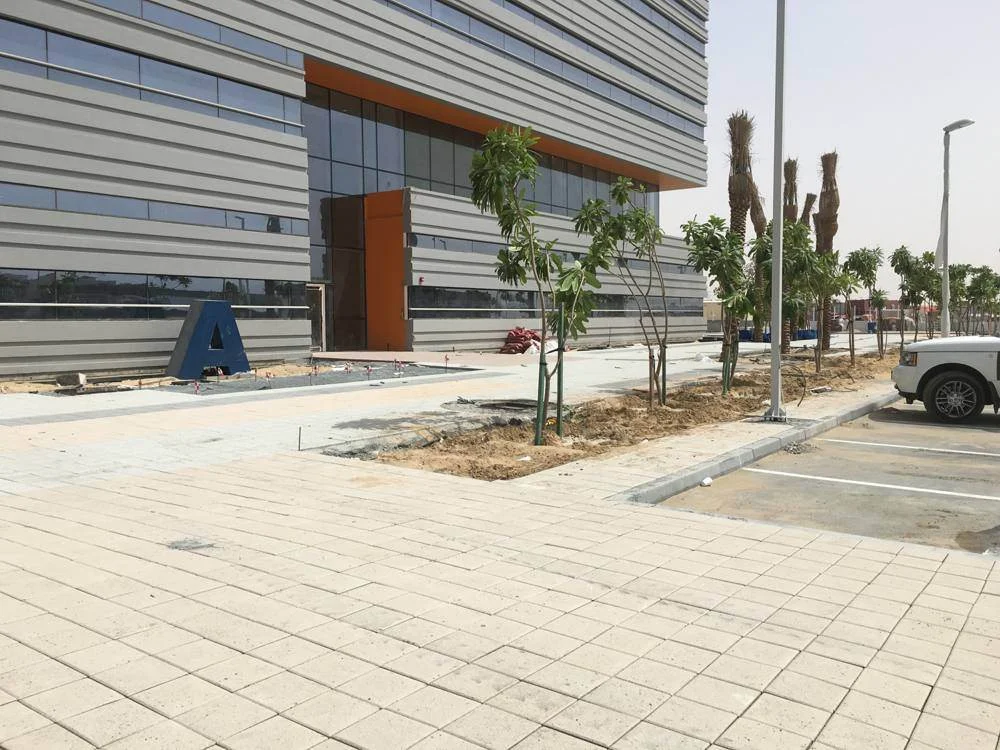
Interlocking pavers are precast concrete blocks that lock together through their shape, the sand in the joints and the kerbs around them. Load on one block is shared with its neighbours, so a well-built interlock pavement spreads weight instead of cracking under it. The joints also let the surface move slightly with heat, which is why interlock copes with Dubai's temperatures better than a large plain concrete slab.
You will see interlock on villa driveways, building access roads, footpaths, car parks, courtyards and commercial forecourts across the UAE. Done well, it lasts for decades and individual blocks can be lifted and relaid for repairs.
This guide covers the main paver types, why the base matters, how we install interlock step by step, and when to call a professional.
Types of interlocking pavers
Choose the paver for the traffic it will carry, not just the look.
- Pedestrian pavers – thinner blocks for footpaths, patios, garden paths and courtyards. Available in many colours and patterns such as herringbone, basketweave and running bond.
- Vehicular pavers – thicker blocks for driveways, access roads and car parks. On our projects, the minimum for vehicle areas is 80 mm, and herringbone is the preferred pattern because it locks best under turning wheels.
- Large-format pavers and slabs – bigger units for a clean, modern look at entrances and plazas. They need a very well-compacted, accurate base, because any unevenness shows, and some are laid on a mortar bed or concrete slab rather than sand.
- Kerbstones – not paving, but essential. They hold the pavers in place and set the finished levels.
A note on rubber tiles: these are used in playgrounds, gyms and pool surrounds for shock absorption. They are not interlocking concrete pavers and are installed differently, usually on a flat, clean slab with the manufacturer's adhesive.
In the UAE, products should also meet the project's specification and any green-building requirements, such as Dubai's Al Sa'fat rules on solar-reflective surfaces for some developments.
Why base preparation matters
The base is what makes or breaks an interlock pavement. If the ground below is soft or poorly compacted, blocks sink, joints open and ruts form, usually within the first year.
That means digging to the right depth, removing loose soil and debris, compacting the subgrade, then building up the sub-base and base in compacted layers to the thickness on the approved drawing. The finished base must be firm, at the right level and laid to falls so water runs off the surface and away from buildings, instead of collecting underneath.
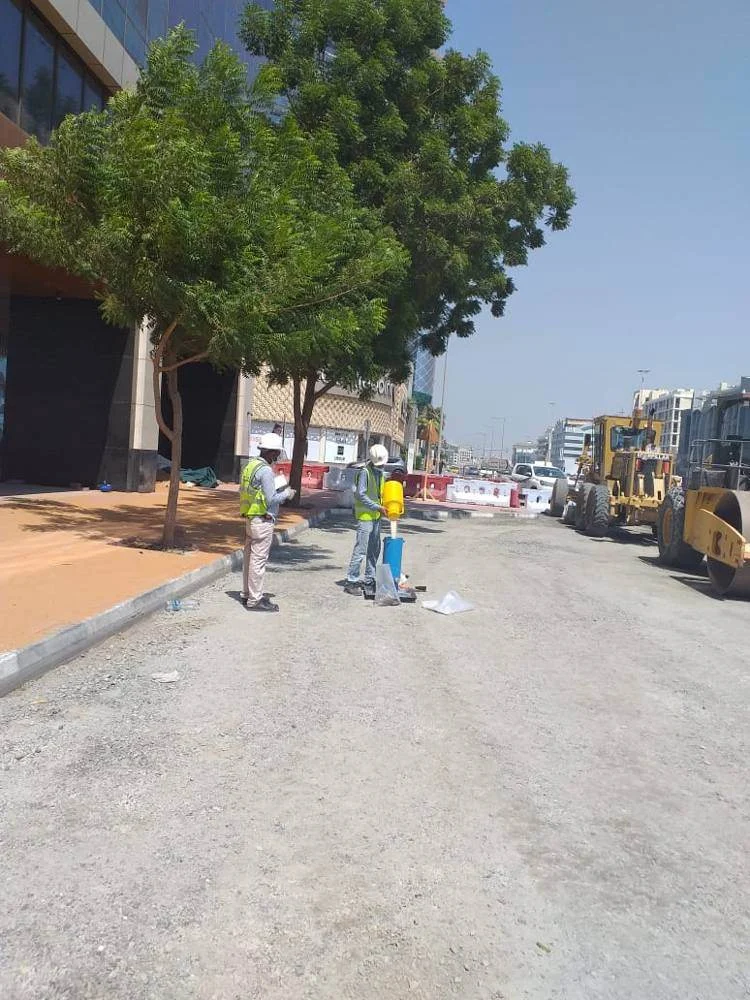
Driveways and access roads need a thicker, stronger base than footpaths. A one-size-fits-all base is one of the most common reasons interlock fails.
How to install interlocking pavers: step by step
This is the sequence our crews follow, based on AMRCE's approved method statements.
1. Permits, services and site safety
For any work in the public right of way, such as footpaths, building access or a driveway connection to the road, the required NOCs from RTA, DEWA, Dubai Municipality and other service owners must be approved first. We obtain service drawings, scan for cables, confirm services with trial pits where needed, and mark them on site before any digging. The work area is barricaded with cones, barriers and signs.
2. Setting out and levels
The area is surveyed and pegged out to the approved drawing, with finished levels and falls marked. This is also when we confirm the paver type, thickness and pattern against the shop drawing.
3. Excavation and subgrade
The area is excavated to the design depth. Topsoil, organic material and unsuitable soil are removed, and the subgrade is compacted. Soft spots are dug out and replaced before going further.
4. Sub-base and base compaction
Graded aggregate is spread in layers and compacted with a plate compactor or roller sized for the area. Levels and falls are checked throughout, and compaction must meet the specification and be approved by the engineer before the next layer.
5. Kerbstones first
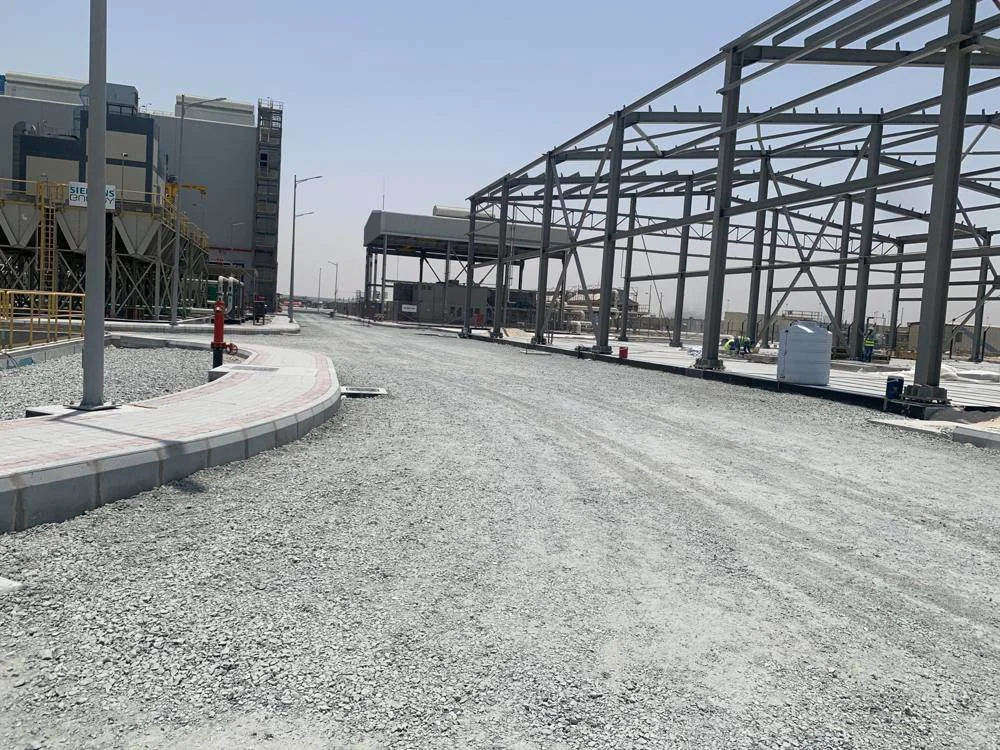
Kerbstones are installed before the pavers, on a concrete blinding or bed as shown on the drawing. They are the edge restraint that stops blocks spreading sideways, and they act as the reference line and level for the paving inside.
6. Bedding sand
A layer of bedding sand, typically about 50 mm, is spread over the compacted base and screeded to level. Nobody walks on it once screeded.
7. Laying the pavers
Blocks are laid from a straight edge or kerb line in the chosen pattern, with even joints. Edge pieces are cut with a block splitter or saw for a neat finish. Large units are lifted with proper equipment. Levels and joint lines are checked as the work progresses.
8. Jointing, compaction and cleaning
Fine jointing sand is spread over the surface and the pavers are compacted with a plate compactor, which settles the blocks into the bedding and drives sand into the joints. More sand is swept in until the joints are full. The surface is then cleaned, damaged blocks are replaced, and route markers are reinstated.
9. Inspection and sealing (optional)
We submit an inspection request to the engineer for approval. Sealing is optional: a compatible sealer helps with stain resistance and colour retention in Dubai's dust and sun, and should only go on a clean, dry surface.
Quality checks we run
- Pavers and kerbs checked against the approved specification for size, strength, colour and texture.
- Visual checks for cracks, chips and uneven edges, plus compression tests on samples.
- Kerb alignment and level checked during installation.
- Surface level and joint width checked before handover.
Interlock projects we have delivered
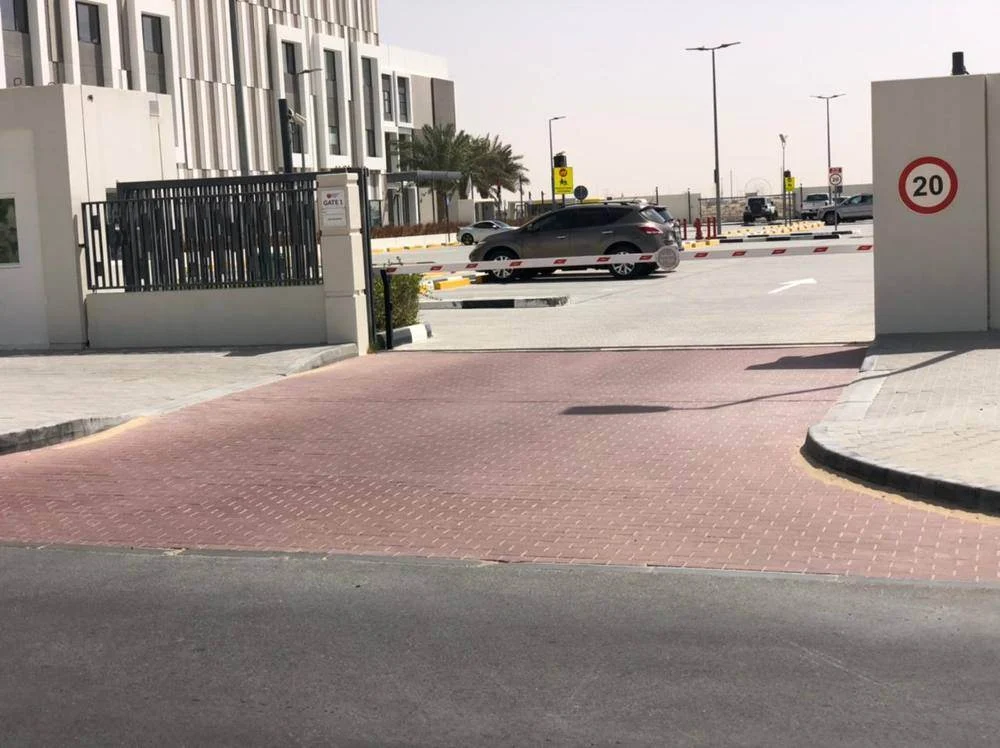
- Amity University Dubai, Academic City – campus roads, parking and paving around the main buildings.
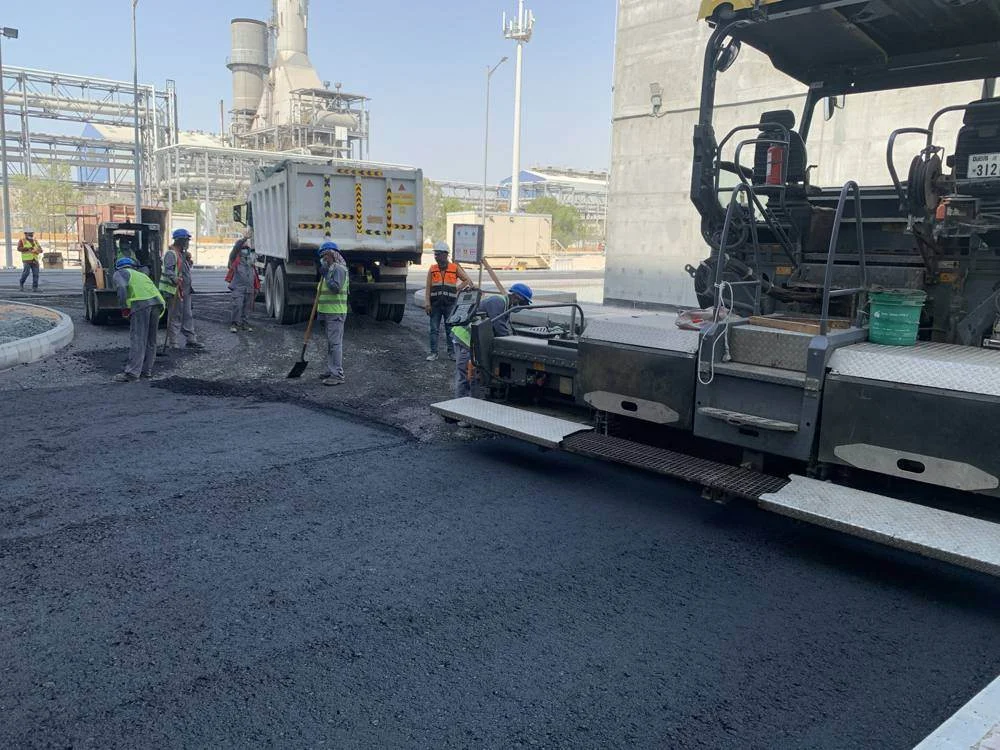
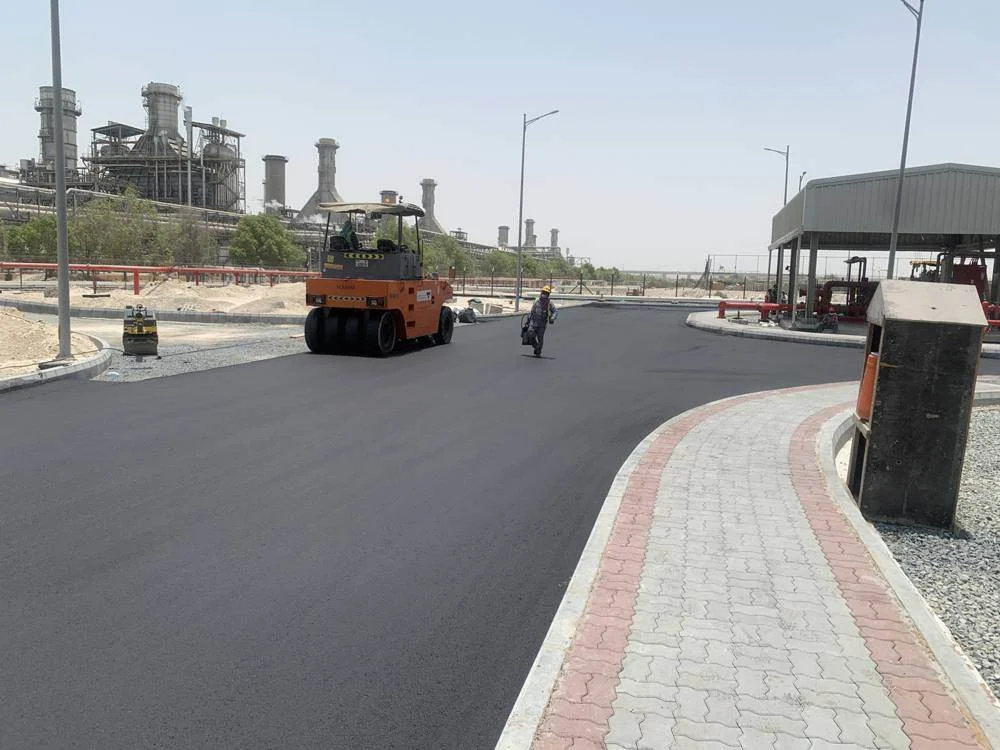
- Emirates Global Aluminium, Jebel Ali – interlock footpaths and kerbs alongside the new asphalt roads at the H-Class power plant.
- Dragon Mart, Nakheel – asphalt and paving block works.
- Palm Jumeirah residential project – careful removal and reinstallation of precast pavers next to live 132 kV cables, with materials and plant kept 10 m clear of the services.
See more on our projects page, or read how we build the asphalt roads that interlock often sits beside in Asphalt Paving Layers and Pavement Construction Explained.
DIY or hire a professional in Dubai?
A small, flat garden path on stable ground can be a DIY job. For driveways, access roads, car parks, large-format paving, commercial areas or anywhere with drainage or authority requirements, use a professional contractor. That avoids the usual problems: weak compaction, wrong falls, missing edge restraint, uneven bedding and early sinking.
If the work touches the public right of way, you will also need NOCs, which a contractor like AMRCE can handle as part of the job.
Maintaining interlocking pavers
- Sweep regularly with a stiff broom or blower to clear sand and dust.
- Wash with water and a mild detergent; avoid harsh chemicals.
- Remove weeds and debris from joints.
- Treat oil and other stains promptly with a cleaner suited to concrete pavers.
- Check edges and kerbs, and top up joints when sand is lost. Use the same type of jointing sand that was used originally; polymeric sand is a separate product that should only be used where it was specified.
- Keep drainage paths clear so water does not pool.
- If the surface was sealed, reseal every two to three years or when the finish wears.
- For heavily soiled paving, a professional pressure wash and re-sand restores it.
Get professional interlock installation in Dubai
A good interlock surface starts long before the first block is laid: with the right permits, a properly compacted base, firm kerbs and well-filled joints. AMRCE is an RTA-approved contractor with ISO 9001, 14001 and 45001 certification. Contact us to discuss your driveway, access road or paving project.
FAQs
How long does interlock installation take? A small footpath can be laid in one or two days. Driveways, access roads and commercial areas take longer, depending on excavation, base thickness, NOC timelines and the size of the area.
Do interlocking pavers need sealing? Not always. In Dubai's dusty, sunny conditions, sealing helps with stains, fading and jointing sand loss, but a well-built unsealed pavement performs well too.
Can I lay interlocking pavers over existing concrete? Sometimes. The slab must be sound, level and able to drain, and the pavers are usually laid on a thin sand or mortar bed with drainage allowed for. We assess this on site.
How thick should driveway pavers be? For areas with vehicles, we use a minimum of 80 mm, on a base designed for the expected traffic.
Do I need an RTA NOC for interlock work? Work in the public right of way, such as a footpath or the access to your plot, needs NOCs from RTA and often DEWA and Dubai Municipality. Work entirely inside a private plot usually does not.