Asphalt Paving Layers and Pavement Construction Explained
· 9 min read
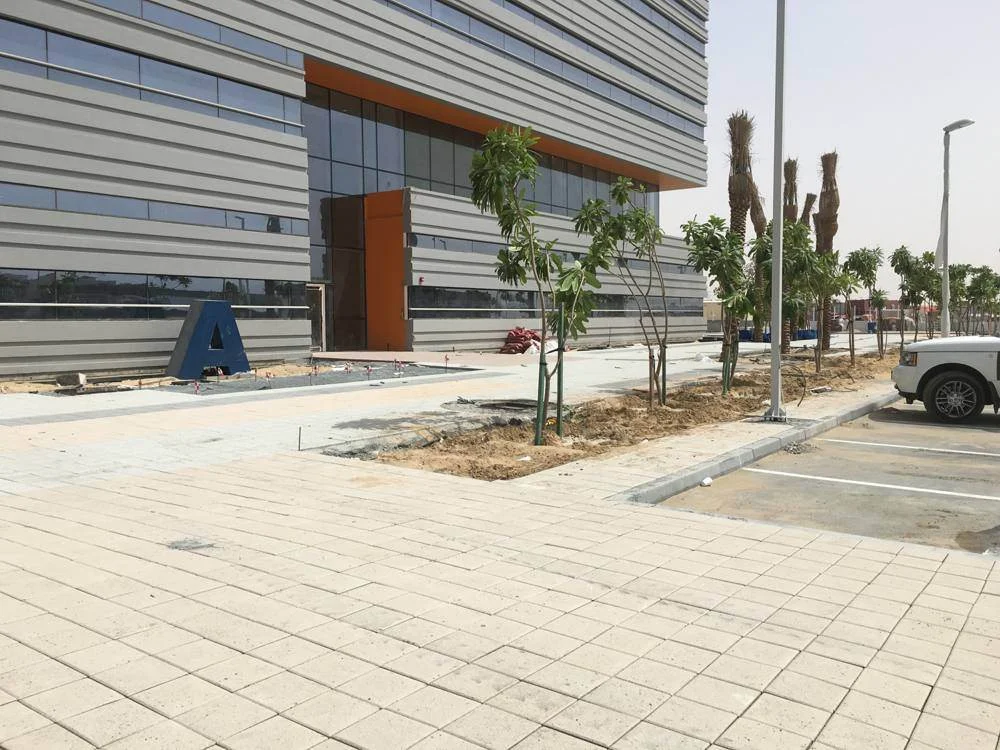
Why do some asphalt roads and driveways in Dubai last 15 years while others rut within one summer? The answer is almost never the black top you can see. It is the layers underneath, and how carefully each one was built.
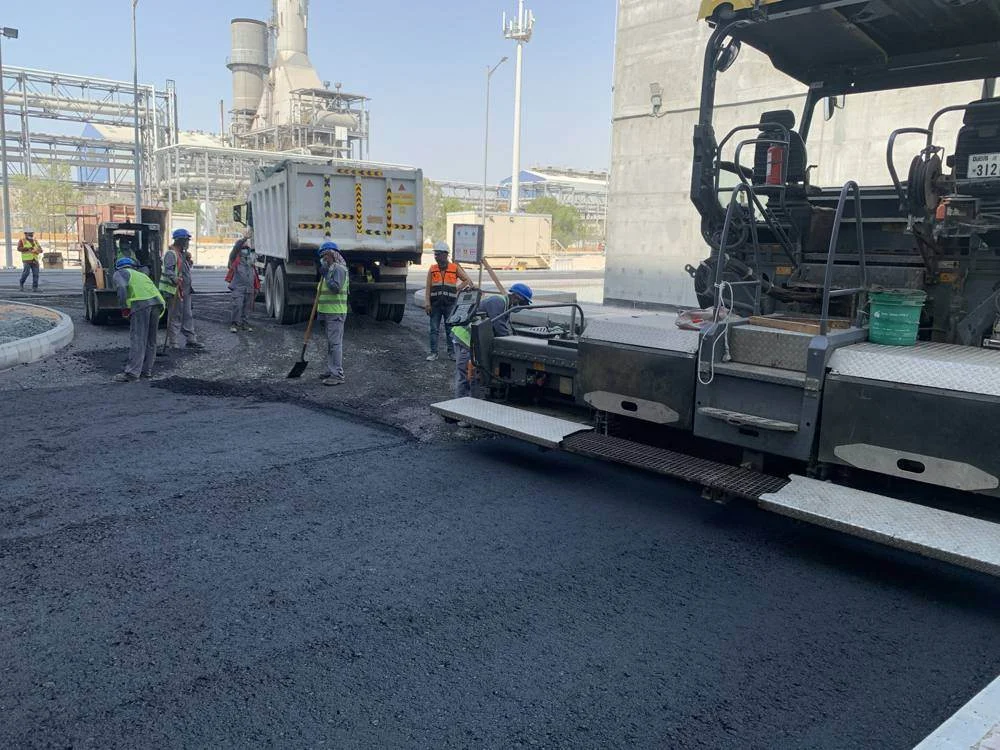
A durable asphalt pavement is an engineered system. Each layer has one job: carry load, spread it, drain water, or resist wear. If one layer is weak, the layers above inherit the problem, and in Dubai's heat that shows up quickly as cracking, rutting and potholes.
This guide walks through each asphalt paving layer, the thin bonding coats people forget, how asphalt compares with concrete, and the mistakes that shorten pavement life. It is written from what our crews do on site every day.
What are the layers of an asphalt pavement?
A typical asphalt road has five main layers, from the ground up: subgrade, sub-base, road base, asphalt base (binder) course and wearing course. Between them sit two thin coats that hold the system together: a prime coat on the granular road base and a tack coat between asphalt layers.
The lower layers provide structural support. The upper asphalt layers carry traffic stress, keep water out and give a smooth, skid-resistant surface. A light-duty driveway may combine or thin some layers; a heavy-haul industrial road will thicken them. The design always starts from the soil, the traffic and the drainage.
Subgrade: the foundation
The subgrade is the natural or improved soil the whole pavement sits on. Weak or wet spots here travel upwards as settlement and cracks, no matter how good the asphalt is.
We test and proof-roll the subgrade, remove soft or unsuitable material, adjust moisture, then grade and compact it to the project specification before anything is placed on top.
Sub-base: load spreading and drainage
The sub-base is a compacted layer of graded aggregate above the subgrade. It spreads wheel loads over a wider area and, when designed for it, lets water drain away from the structure. Aggregate grading, layer thickness and compaction are what make or break it.
Road base: the main granular layer
The road base is a dense, well-graded crushed aggregate layer laid and compacted in controlled lifts. It is the platform the asphalt is built on, so its level and surface finish matter as much as its strength. Before asphalt goes down, we check it for level, grade and soft spots.
Prime coat: sealing the road base
Once the road base is approved, it is swept clean with a blower and sprayed with a prime coat, usually a cut-back bitumen such as MC-70. Prime coat penetrates the top of the granular layer, binds loose particles and creates a surface the asphalt can bond to.
On our sites, prime is applied at around 0.7–1.5 litres per m², one lane at a time, at an application temperature of about 50–80 °C, and the rate is checked and recorded. It is not sprayed in rain, dust storms or very low ambient temperatures, and traffic stays off it for 24 hours (or as the engineer directs) while it cures.
Asphalt base or binder course: the structural asphalt
The first asphalt layer is a coarser, stronger mix that carries most of the traffic stress and spreads it down into the granular layers. Getting its thickness, temperature and compaction right is critical, because it is buried once the wearing course goes on.
Tack coat: bonding the asphalt layers
Before the next asphalt layer is laid, a light tack coat of bitumen emulsion (for example SS-1h) is sprayed on the clean surface and allowed to "break" (turn from brown to black). Without it, the layers can slide over each other under braking traffic and delaminate.
Wearing course: the surface you drive on
The wearing course is the finer, dense top layer. It gives ride quality and skid resistance and seals water out. It also takes the full force of Dubai's sun, which is why mix design, binder grade and compaction density matter so much here.
Why every layer matters
Think of pavement layers like a stack of building blocks. If the bottom block is on a soft carpet, the whole stack leans, however neat the top block looks. A strong wearing course cannot save a weak base, and a strong base cannot stop water getting in through a poorly compacted surface.
That is why pavement design looks at soil strength, material quality, layer thickness, traffic volume and drainage together, and tailors them to each site.
Asphalt vs concrete paving: which is better?
Both are used across UAE roads and industrial sites, and each suits different jobs.
Asphalt (flexible pavement) is built in layers and bends slightly under load. It is quick to build and can be opened to traffic once it has cooled, and it is easy to mill, patch and resurface. Most UAE asphalt uses penetration-grade bitumen; polymer-modified binders are specified where traffic is heavy or temperatures are extreme, because they resist rutting better.
Concrete (rigid pavement) is a slab that spreads load through its own stiffness. In the UAE it is typically made with sulphate-resisting cement or GGBS blends to cope with aggressive soils, and may include dowel bars, tie bars and sealed joints. It suits heavy static loads such as container yards, loading bays and fuel forecourts. It needs time to cure before use, costs more upfront, and repairs are slower and more disruptive, though routine maintenance is generally lower.
The right choice depends on ground conditions, traffic type, programme, budget and how long the owner needs the pavement to perform.
How AMRCE builds durable asphalt pavements
Our asphalt works follow written method statements that are approved by the client's engineer before work starts. On every job, that means:
- Site and survey checks first. Levels, falls, drainage, access and expected traffic are reviewed; underground services are identified and protected; and the required RTA, DEWA or Municipality NOCs are in place for work in the right of way.
- Approved materials only. Aggregates, filler and bitumen come from approved sources, and the mix design is approved by the engineer before production.
- Heat kept in. Asphalt is delivered in clean, sheeted tipper trucks so it does not lose temperature on the way to site.
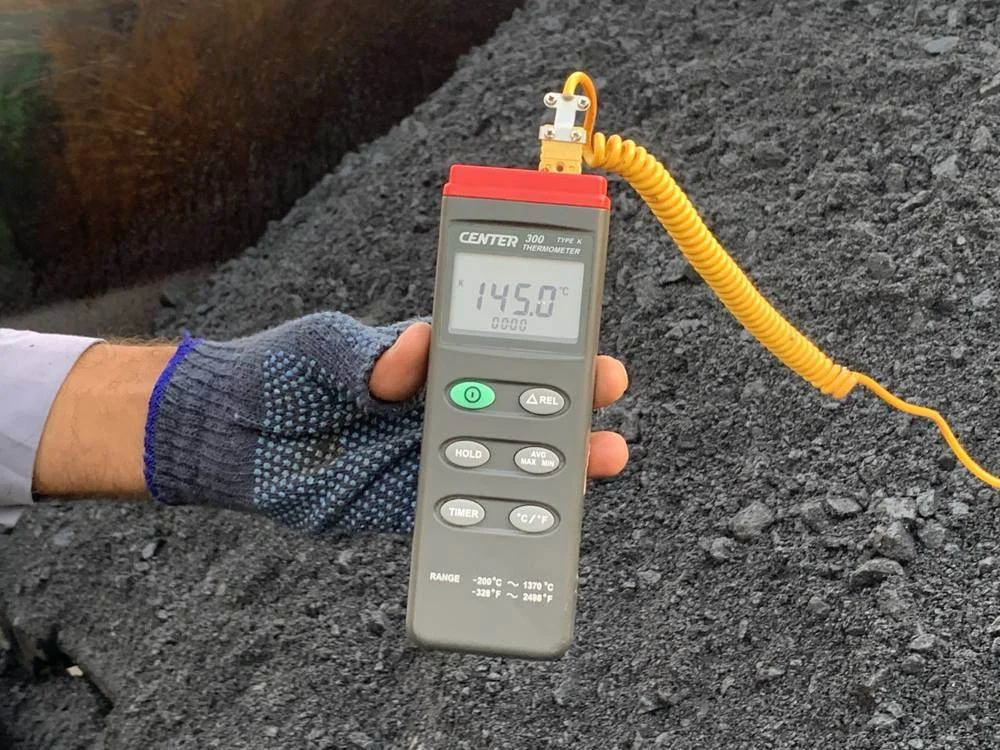
- A strict temperature window. Mix is placed at the paver within 135–163 °C. Anything outside that range is rejected, and temperatures are recorded at the plant and at the point of laying.
- Automatic level control. Pavers run with sensors referenced to string lines or level pins at no more than 10 m intervals, so each layer is built to the design levels.
- Proper joints. We plan each day so lanes are laid against hot edges wherever possible. Cold joints are cut back to a clean vertical face and painted with emulsion, and longitudinal joints in successive layers are offset by at least 150 mm.
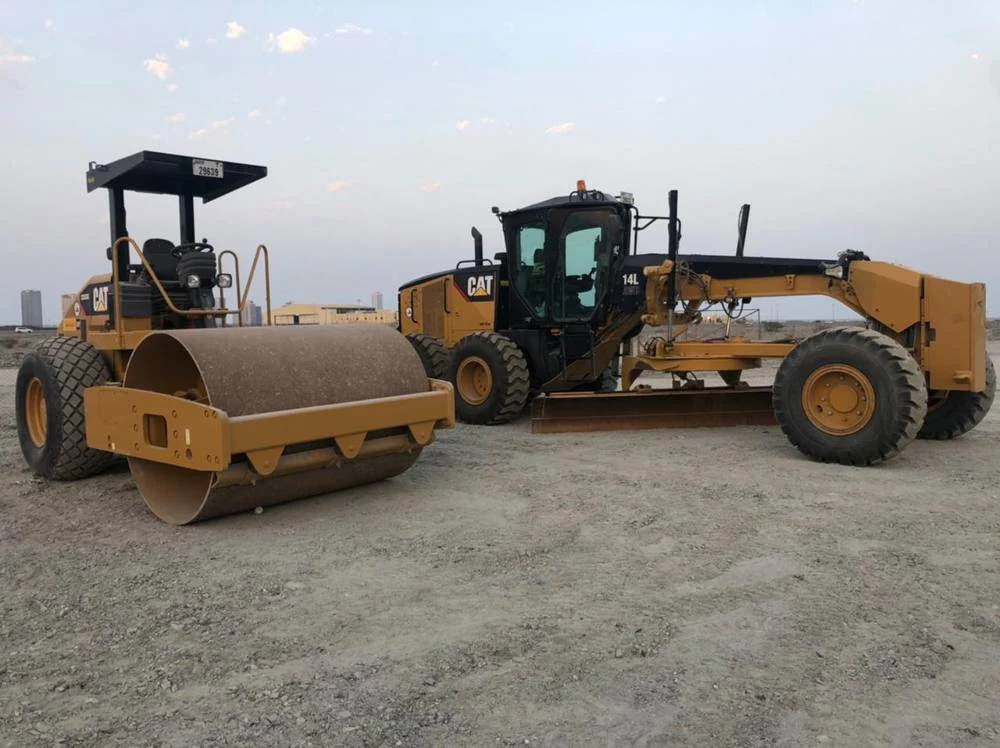
- A set rolling sequence. Breakdown rolling with a tandem roller in static mode, then vibratory passes, then pneumatic-tyred rolling, finished with a static pass to remove roller marks. Small plate compactors handle kerb edges.
- Testing, not guessing. Samples are taken for grading, binder content and Marshall properties; cores are cut for density and thickness; and the finished surface is checked with a 3 m straight edge.
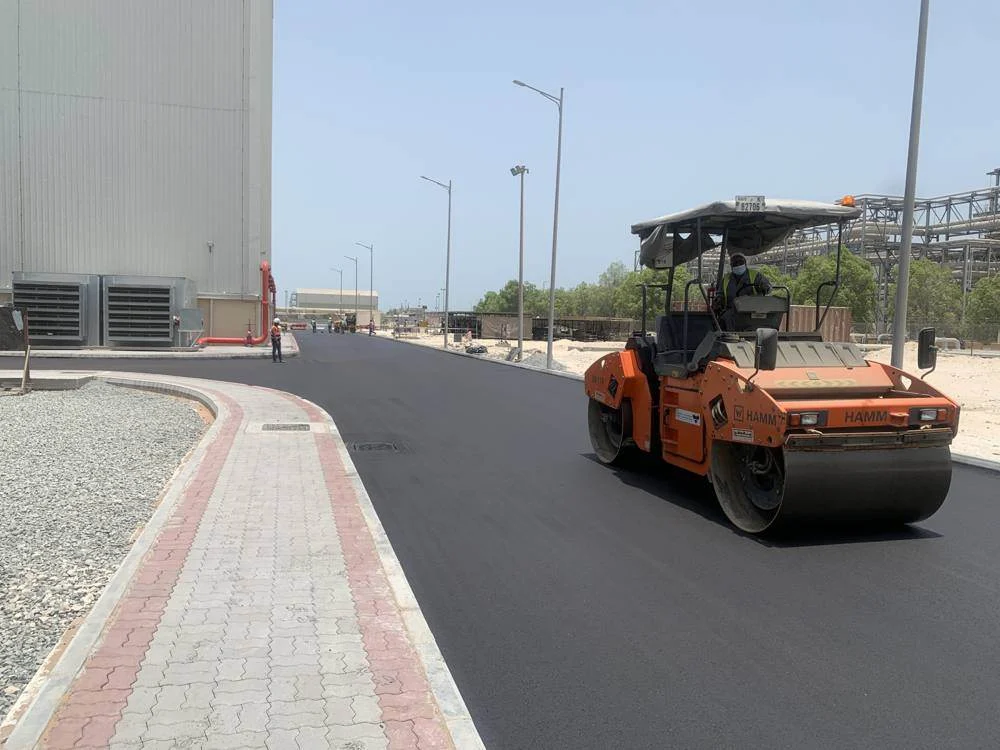
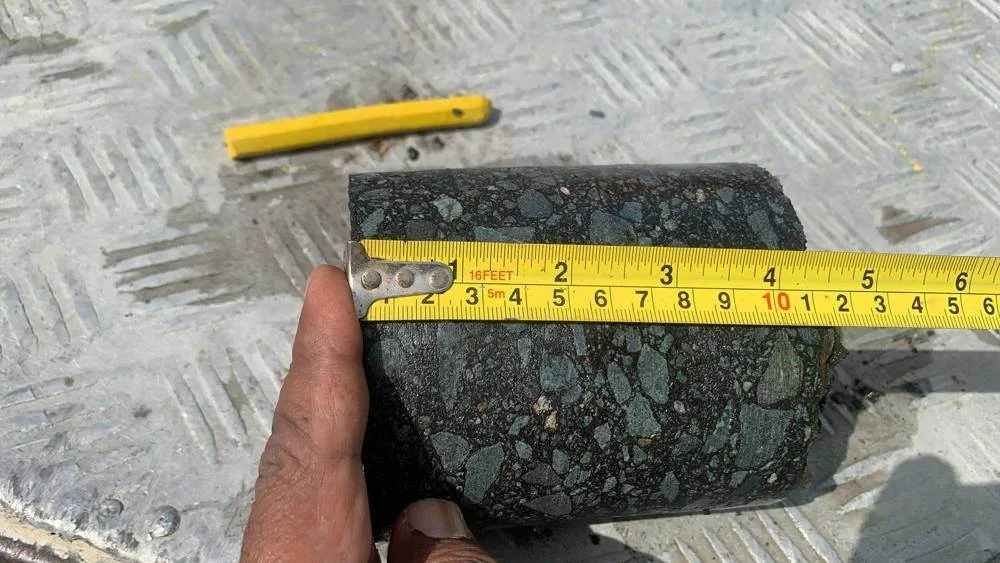
Much of this work happens at night, when traffic is lighter and temperatures are kinder to both crews and fresh asphalt.
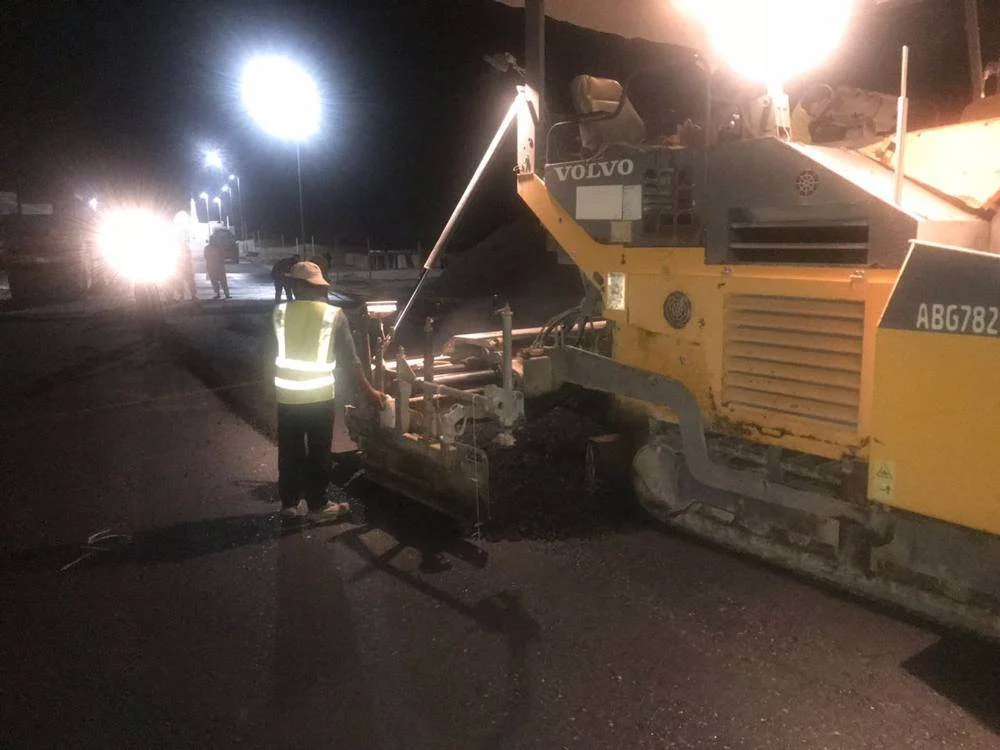
Where we have done this
Over nearly two decades, our teams have built every layer on this page across Dubai, including:
- Emirates Global Aluminium, Jebel Ali – internal roads for the H-Class combined cycle power plant, from road base and kerbs through to asphalt surfacing.
- DAMAC Akoya Oxygen, Dubailand – full-depth access road construction, from formation to wearing course.
- Dubai Parks & Resorts, Jebel Ali – internal road network and drainage.
- Atlantis The Palm – car park asphalt surfacing and line marking.
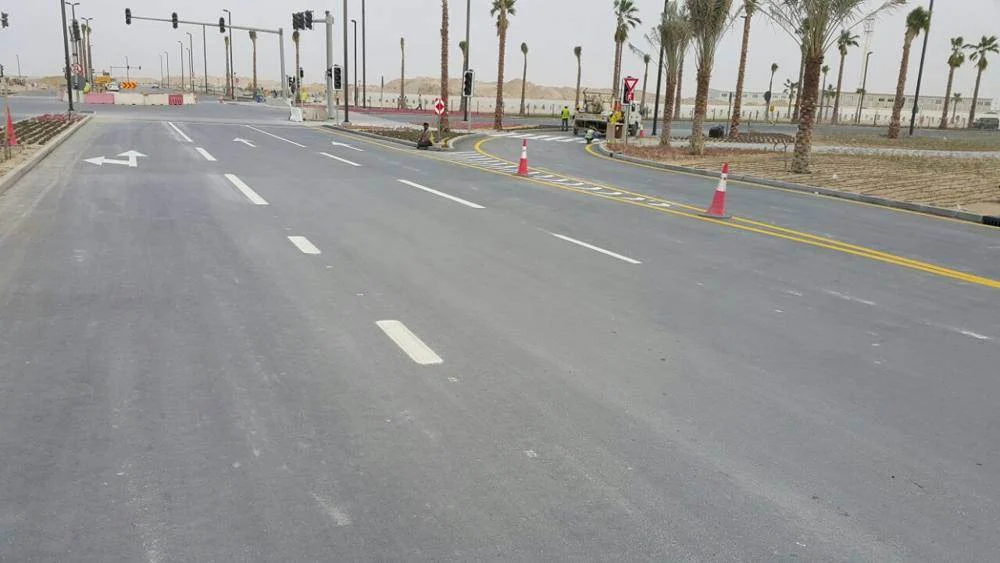
See more on our projects page.
Common mistakes that shorten pavement life
- Poor subgrade preparation – soft or wet spots left in place lead to settlement and cracking.
- Skipping or skimping on prime and tack coats – layers that are not bonded slide and delaminate.
- Laying outside the temperature range – mix that is too cold cannot be compacted properly; mix that is overheated loses binder quality.
- Poor compaction – high air voids let water and air in, causing early cracking and ravelling, while uneven compaction leads to rutting.
- Too thin for the traffic – under-designed layers deflect and fatigue under heavy vehicles.
- Bad drainage and falls – standing water is one of the fastest ways to destroy a pavement.
- Weak joints – cold joints that are not cut back and sealed open up and let water in.
- Opening to traffic too early – driving on primed road base before it has cured, or on asphalt before it has cooled, leaves ruts and marks that never fully recover.
- Delayed repairs – small cracks and potholes grow quickly once water gets in.
- Choosing on price alone – cheaper materials or thinner layers usually cost more in early repairs.
Most of these are avoided with good materials, site-specific design, close supervision and timely maintenance.
Talk to an asphalt paving contractor in Dubai
Planning a new road, car park, access route or resurfacing job? AMRCE is an RTA-approved road contractor with ISO 9001, 14001 and 45001 certification, and we handle the NOCs as well as the works. Contact us for a no-obligation estimate tailored to your site, traffic and budget.
FAQs
What are the main asphalt paving layers? From the bottom: subgrade, sub-base, road base, asphalt base (binder) course and wearing course, with a prime coat on the road base and a tack coat between asphalt layers. Most roads have two asphalt layers; heavy-duty roads may have three.
Which layer carries the most load? The asphalt base course and the granular road base do most of the structural work, spreading wheel loads so the subgrade only sees a fraction of them. The wearing course takes the highest surface stresses and the weather, so it must be dense and well bonded.
How long before I can drive on new asphalt? Asphalt does not need to cure like concrete. It can usually take traffic once it has cooled, which in Dubai's heat can take several hours. Primed road base, however, should be left for around 24 hours before paving or traffic.
Is asphalt better than concrete? It depends on the job. Asphalt is faster to build and easier to resurface. Concrete suits heavy static loads such as container yards and forecourts but takes longer to build and repair.
Do I need an RTA NOC for asphalt works? Work in the public right of way, such as access roads, footpaths or road connections, needs NOCs from RTA and often from other authorities. Work entirely inside a private plot usually does not. We can advise and apply on your behalf.